Understanding Business Firms: Effect, function, and structure
In the landscape of contemporary commerce, business corporations stand as essential entities, managing a substantial section of economic activities around the world. A service firm is a lawful entity that is different and distinctive from its owners, that are investors. This splitting up guards investors from personal liability for the corporation's obligations and financial obligations, a fundamental benefit that motivates financial investment. Firms are capable of becoming part of agreements, suing and being filed a claim against, owning possessions, and paying tax obligations. They are produced under the legislations of each state and must follow numerous laws that control their structure and procedures. The business structure is ordered, normally being composed of investors, a board of directors, and policemans. Investors invest resources and possess the corporation however do not manage everyday operations; instead, they choose a board of directors that oversee the more comprehensive tactical direction and assign policemans that take care of daily affairs.
The formation of a company includes a number of actions, consisting of the filing of Articles of Incorporation with the state, which outline the primary function of business, its major workplace, and the number and type of authorized shares. As companies grow, they might release supply to increase funding, thus weakening possession but acquiring the funds needed for development and procedures. This capability to elevate large amounts of funding makes them specifically attracting large-scale services. Companies additionally gain from perpetual presence, implying they remain to exist no matter adjustments in ownership or administration. This continuity provides security to business atmosphere and advertises long-lasting planning and investment. The impact of firms expands beyond economic dimensions; they likewise possess considerable social and political power, frequently playing critical roles in work advancement, creation, and administration. Comprehending the technicians and implications of company framework is necessary for stakeholders varying from financiers to policymakers.
Comprehending the Framework and Feature of Company Firms
A service company is a distinct lawful entity, different from its owners, which is formed to carry out business tasks with the objective of creating earnings. This framework permits the corporation to have properties, incur obligations, and enter right into contracts under its company name, supplying a substantial level of defense to its shareholders from personal liability for the debts and commitments of the firm. Usually, a company is possessed by shareholders who spend resources right into business in exchange for shares representing partial possession. These investors have actually restricted obligation, implying their individual properties are protected; they are just in danger of losing their investment in the corporation. The governance of a company is usually overseen by a board of directors, elected by the investors. This board makes major decisions and establishes lasting policies, while day-to-day procedures are handled by managers and policemans assigned by the board. This hierarchical framework assists in organizing the obligations and powers within the corporation, making sure an equilibrium of power among different degrees of stakeholders. One more crucial function of corporations is their ability to raise substantial amounts of funding through the sale of shares to the public, a procedure promoted by stock exchanges. This function not only fuels growth and technological innovations but additionally adds to the total financial growth by fostering and developing tasks innovation. Therefore, firms play a crucial function in the modern economic climate, driving ahead markets and influencing the financial landscape substantially.
Corporate Framework and Administration
In the world of service, understanding the framework of company framework and administration is important for both budding business owners and seasoned investors. At its core, a corporation is a legal entity different from its proprietors, qualified of possessing building, participating in agreements, and being responsible in lawsuits separately of those that have it. This separation is critical as it guards personal assets from company obligations and offers a structured strategy to management and operational obligations. Company administration, the system of rules, techniques, and procedures whereby a firm is directed and controlled, plays a basic function in maintaining the stability and efficiency of service procedures. It involves stabilizing the rate of interests of a business's numerous stakeholders, such as investors, management, consumers, vendors, financiers, government, and the area. While the specifics can vary commonly throughout various territories, the basic framework usually entails a board of supervisors in charge of making major decisions and supervising the basic program of the company, and officers who manage the daily operations. Effective governance requires a robust collection of plans and methods that ensure the responsibility of people within the company by utilizing well-defined systems to manage the complex interaction between the numerous stakeholders. These devices often include specific and implicit agreements, business hierarchies, and processes made to give a structure for accomplishing the functional and tactical purposes of the firm. Thus, the style of company governance is not simply an institutional detail; it is central to the efficacy and the honest compass of the organization, influencing every little thing from company society to bottom-line efficiency.
Key Structures and Versions of Company Corporations
Service firms can be found in different structures and designs, each customized to fulfill specific goals, functional needs, and calculated ambitions of entrepreneur and stakeholders. One fundamental structure is the C company, a prominent selection amongst businesses due to its capability to draw in investors through the issuance of publicly traded securities. simply click the up coming site provide restricted obligation to their proprietors, meaning that the personal properties of shareholders are secured from claims against the company. However, they undergo dual taxes— when at the company degree and again at the private degree on rewards. Unlike C corporations, S corporations avoid this double tax by passing company earnings, losses, deductions, and credit ratings via to their investors for government tax obligation purposes. infosys corporate action history , the Limited Liability Business (LLC), incorporates the obligation protection of a firm with the tax obligation effectiveness and functional adaptability of a collaboration. The LLC is favored by small to medium-sized businesses for its simplicity and much less rigid functional demands contrasted to typical firms. Globally, company structures can differ substantially. For example, in Germany, the GmbH (Gesellschaft mit beschränkter Haftung) supplies a similar responsibility protection to that of an LLC however with different regulative and tax effects. 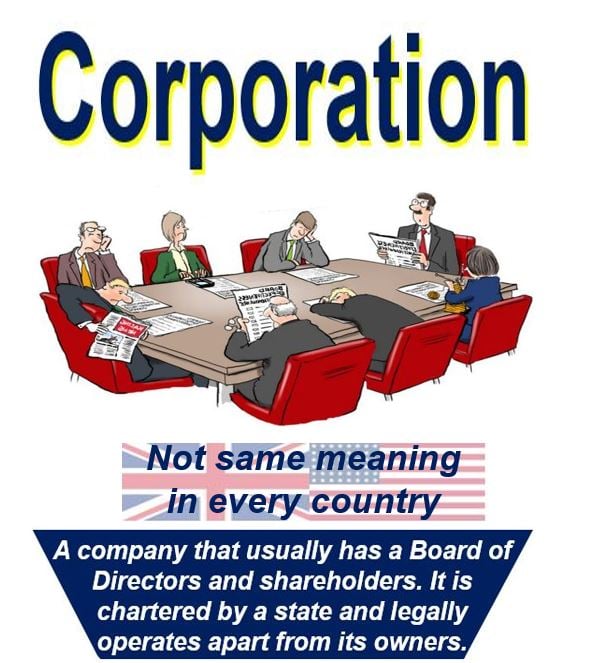 Furthermore, corporations are likewise discovering innovative designs like the Advantage Company, which not only looks for to produce earnings however additionally to generate a favorable influence on culture and the environment. This version is legitimately empowered to go after wider objectives beyond the financial passions of shareholders, a move that is coming to be progressively preferred with socially aware business owners. Each of these company frameworks and models serves various business objectives and features its one-of-a-kind set of lawful, tax obligation, and functional ramifications that must be thoroughly taken into consideration when intending a company. Understanding read the article and the thorough nuances that each model provides is important for making educated decisions that line up with a company's long-term critical goals.
Strategic Effects of Company Company Frameworks
The architectural framework of a business corporation plays a pivotal function in dictating its operational efficiency and strategic flexibility in a dynamic market setting. Recognizing the various kinds of corporate structures— such as C corporations, S corporations, Restricted Obligation Firms (LLC), and partnerships— offers a foundation for company owner to straighten their operational objectives with the most valuable legal and tax obligation effects. C companies, for example, are treated as separate tax obligation entities entirely, resulting in what is understood as dual taxes— first on the business's revenues and once again on the rewards paid to investors. However, this structure permits potentially limitless growth via the sale of supplies, which can be a critical benefit for firms seeking to increase rapidly. On the other hand, S companies benefit from pass-through taxation, where losses and profits are straight reported on the owner's personal income, staying clear of dual tax and suiting smaller businesses that intend for simplicity in their tax handling. LLCs offer a lot more adaptability, incorporating the restricted responsibility functions of a firm with the tax obligation efficiencies and functional flexibility of a partnership. The option of service structure influences not just tax obligation considerations but additionally influences how services are regarded by investors, potential companions, and markets. Choices relating to business framework ought to therefore be made with a thorough understanding of both short-term advantages and long-lasting tactical goals, making certain that the chosen framework supports sustainable development and operational agility. As markets proceed to progress and brand-new lawful laws enter into play, the flexibility offered by a suitable business structure can be a significant factor of a company's success and durability.